Off the Grid, Off the Message: How Queensland's Homeschooling Families Are Forming Their Own Views on Fluoride
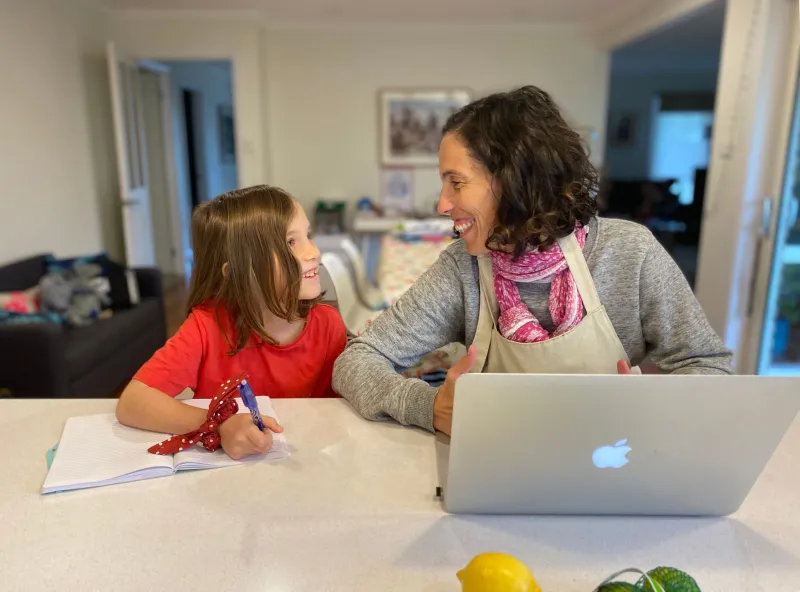
Queensland's homeschooling sector has grown considerably over the past decade. Figures from the Queensland Department of Education suggest that registered home education enrolments have more than doubled since 2015, a trend accelerated — though not entirely explained — by the disruptions of the COVID-19 pandemic. Behind those numbers is a diverse population: religious families, families in remote areas with limited school access, families with children who have additional needs, and a substantial cohort drawn to alternative educational philosophies. What unites many of them, and what makes the fluoride question particularly interesting, is their relationship with institutional authority — including public health institutions.
A Different Information Ecosystem
In Queensland's state and independent schools, dental health education arrives through multiple channels: school dental services, visits from oral health therapists, curriculum-embedded health content, and the ambient authority of the school environment itself. Children in these settings absorb fluoride messaging — however imperfectly — as part of a broader institutional health literacy framework.
Homeschooled children, by contrast, receive health information primarily through whatever their parents choose to provide. For many homeschooling families, this is a feature rather than a bug: the freedom to curate educational content, including health content, is central to the homeschooling philosophy. But it creates a landscape in which the sources of information about fluoride are far more varied — and far less subject to the quality controls that govern school-based health education.
Research into homeschooling communities in Australia and comparable English-speaking countries consistently finds elevated rates of vaccine hesitancy and alternative health belief adoption relative to the general population. Fluoride scepticism follows a similar pattern. This is not universal — Queensland's homeschooling community is not monolithic — but it is a documented tendency, and one that public health communicators have been slow to address.
Where Homeschooling Families Get Their Information
Conversations with Queensland home educators reveal a genuinely diverse information landscape. Some families rely on the same sources as any engaged parent: the NHMRC website, Queensland Health materials, their GP or family dentist. Others navigate a parallel ecosystem of natural health websites, holistic parenting podcasts, and social media communities in which fluoride scepticism is ambient and unremarkable.
The platforms most commonly cited by homeschooling parents as sources of health information — Facebook groups, YouTube channels, Substack newsletters, and dedicated homeschooling forums — are precisely the spaces where institutional health messaging struggles to compete with emotionally resonant personal narratives. A parent describing their child's improved health after switching to rainwater or filtered water carries a persuasive weight in these communities that a government fact sheet rarely matches.
Notably, several Queensland homeschooling networks have developed their own health curriculum resources, some of which treat fluoride with explicit scepticism. These materials often cite international studies — frequently the same contested research that circulates in broader anti-fluoride communities — without the contextualisation that a trained health educator would apply.
The Dental Literacy Gap
Dental literacy — the capacity to understand, evaluate, and act on information about oral health — is not simply a function of intelligence or education level. It is shaped by the quality and consistency of the health messaging a person receives over time. Children educated within mainstream school systems benefit from repeated, reinforced exposure to evidence-based dental health content. Homeschooled children's exposure is entirely contingent on parental choices.
Queensland's School Dental Service, which provides free dental care to eligible children, does enrol homeschooled children. However, uptake among this population is lower than among school-enrolled children, partly because the referral pathways that operate through schools do not apply, and partly because some homeschooling families have philosophical objections to government health services.
The practical consequence is that some Queensland homeschooled children are simultaneously less likely to receive fluoridated water — because their families have installed filtration systems or rely on rainwater tanks — and less likely to have regular professional dental contact. This combination does not guarantee poor dental outcomes, but it does represent a meaningful accumulation of risk factors.
Is It Critical Thinking or a Knowledge Gap?
Homeschooling advocates sometimes argue that their communities are more critically engaged with health information than the general public — less likely to accept institutional claims uncritically, more likely to research independently. There is something to this. Some homeschooling parents demonstrate a sophisticated understanding of the fluoride evidence base, including genuine uncertainties in the research, that many mainstream parents do not.
But critical thinking requires accurate raw material. A parent who has been exposed primarily to anti-fluoride content — even if they have engaged with it carefully and sceptically — is working with a skewed dataset. The appearance of independent inquiry can mask a significant asymmetry in the information environment.
Public health bodies in Queensland have largely not adapted their communication strategies to reach homeschooling communities effectively. The assumption that school-based channels are sufficient to convey dental health messaging leaves an increasingly significant population outside the reach of evidence-based guidance.
What Would Better Engagement Look Like?
Several Queensland health communicators and dental professionals interviewed for this piece suggested that the standard top-down approach to fluoride education is ill-suited to homeschooling communities. Families who have opted out of institutional education are unlikely to be persuaded by materials that carry an institutional imprimatur.
More promising approaches include peer-to-peer communication through trusted figures within homeschooling networks, engagement with homeschooling expos and community events, and the development of curriculum resources that acknowledge genuine scientific complexity — including the limits of current evidence — while accurately representing the overwhelming weight of expert consensus.
The goal is not to override parental autonomy but to ensure that the choices homeschooling families make about fluoride are genuinely informed. At present, for a meaningful proportion of Queensland's home-educated children, that condition is not being met.
A Community Worth Engaging
Queensland's homeschooling families are not a monolith, and most are motivated by genuine care for their children's wellbeing. The fluoride question, for many of them, sits within a broader set of concerns about institutional authority, environmental exposures, and the limits of mainstream medicine — concerns that deserve respectful engagement rather than dismissal.
What the evidence does not support, however, is the conclusion that opting out of fluoridated water is a neutral or protective choice for children's dental health. The cumulative data on fluoridation's benefits is substantial, and the risks at Australian water concentrations are not borne out by credible research. Communicating that clearly, through channels that homeschooling communities actually trust, remains an unfinished task for Queensland's public health infrastructure.