Under the Sink and Under the Microscope: What Queensland Renovators Are Really Deciding When They Choose a Water Filtration System
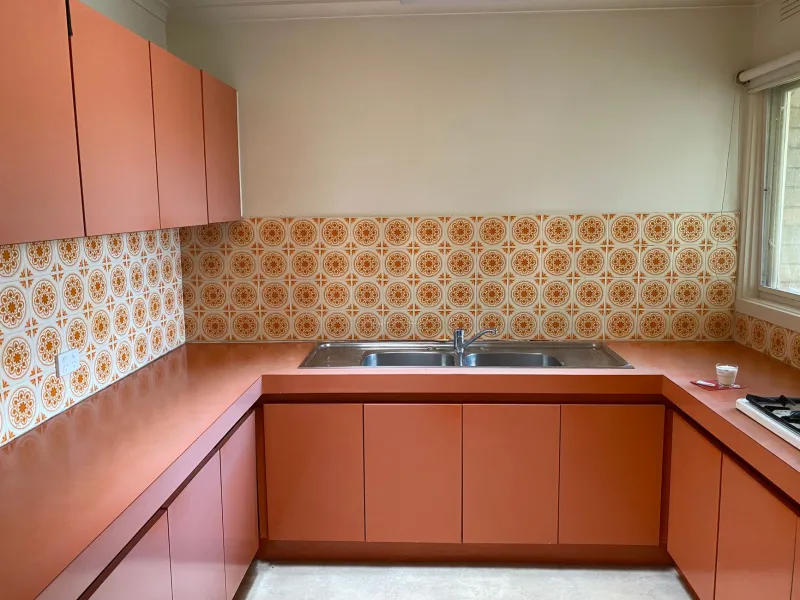
A kitchen renovation in Queensland used to involve decisions about benchtops, splashbacks, and which tap style suited the aesthetic. Increasingly, it involves a conversation with a filtration system supplier about whether to remove fluoride from the household water supply. Walk through any of Brisbane's renovation expos, browse the product listings on major Australian home improvement platforms, or scroll through the renovation threads on popular local Facebook groups, and the presence of fluoride-focused filtration marketing is unmistakable.
This is a relatively recent phenomenon — or at least a recently intensified one. Understanding what is driving it, and whether the health rationale behind it holds up to scrutiny, matters for Queensland families who are about to spend several hundred to several thousand dollars on a water treatment decision.
The Renovation Moment as a Decision Point
Home renovation creates a specific psychological and practical window for reconsidering domestic infrastructure. When walls are open, pipes are exposed, and tradespeople are already on site, the marginal cost of adding an under-sink filter or a whole-house treatment system feels lower than it would at any other time. Filtration suppliers are well aware of this dynamic and market accordingly.
Queensland's renovation sector has been buoyant. The combination of pandemic-era home improvement spending, a competitive property market, and the state's relatively young housing stock has generated sustained demand for kitchen and bathroom upgrades. Into this environment, filtration marketing has inserted itself with considerable sophistication, frequently framing fluoride removal not as a fringe concern but as a reasonable, health-conscious choice for discerning homeowners.
The language used is telling. Products are described as providing "pure" or "natural" water, implicitly positioning fluoridated tap water as impure or artificial. Filtration is presented as a matter of control — over what enters the body, over what children drink — which resonates strongly with the values of renovation-age homeowners who are simultaneously making decisions about insulation, ventilation, and building materials.
What the Filtration Market Is Actually Offering
Queensland consumers considering fluoride removal have several broad options, each with different costs, maintenance requirements, and effectiveness profiles.
Reverse osmosis systems, typically installed under the kitchen sink, are the most effective at removing fluoride — achieving removal rates of 85 to 95 per cent under optimal conditions. They are also the most expensive to purchase and maintain, requiring periodic membrane and filter replacements. Whole-house reverse osmosis systems exist but are uncommon in residential settings due to cost.
Activated alumina filters are specifically designed to adsorb fluoride and are marketed as a more affordable alternative to reverse osmosis. Their effectiveness varies significantly with water pH, flow rate, and filter age, and they require careful maintenance to perform as advertised.
Standard carbon block and activated carbon filters — the most widely sold domestic filtration products in Australia — do not remove fluoride to any meaningful degree, despite occasionally being marketed in ways that imply broader water purification. Queensland consumers should be aware that purchasing a standard under-sink carbon filter will not alter their fluoride exposure.
Rainwater tank systems, common in regional Queensland and increasingly installed in peri-urban and suburban properties, collect unchlorinated and unfluoridated rainwater. Their use as a primary drinking water source raises separate considerations around microbiological safety, lead contamination from roof materials, and the absence of fluoride's protective dental benefit.
The Health Case: What the Evidence Actually Shows
The commercial case for fluoride-removing filtration systems rests, implicitly or explicitly, on the proposition that fluoride in Queensland's drinking water poses a health risk worth mitigating. This proposition requires examination.
Queensland's water fluoridation program operates at a target concentration of 0.7 milligrams per litre — a level set following extensive review by the National Health and Medical Research Council and consistent with World Health Organization guidance. At this concentration, the body of peer-reviewed evidence does not support claims of harm to kidney function, thyroid health, neurological development, or bone integrity in the general population.
The concerns that circulate in renovation and home improvement communities frequently reference studies conducted in regions — parts of China, India, and parts of the United States — where naturally occurring fluoride concentrations in groundwater are two to ten times higher than Australian drinking water standards. Extrapolating from those findings to Queensland's regulated, low-concentration supply requires logical steps that the research does not support.
The NHMRC's position, reaffirmed through its most recent evidence review process, is that water fluoridation at Australian concentrations is safe for all population groups and represents an effective public health measure. Regulatory bodies including Food Standards Australia New Zealand and the Australian Drinking Water Guidelines reach consistent conclusions.
Marketing, Anxiety, and the Trust Deficit
If the health evidence does not support the case for fluoride removal, what is actually driving Queensland renovators toward filtration systems? The answer is likely a combination of factors that have little to do with fluoride specifically.
Trust in public institutions — including water utilities and health authorities — has declined across most Western democracies over the past two decades. Queensland is not immune. When a filtration supplier tells a homeowner that they can take control of their water quality, they are speaking to a genuine and widespread anxiety about institutional reliability, not simply a concern about one mineral at 0.7 mg/L.
This anxiety is compounded by the information environment. Social media algorithms tend to surface health content that generates strong emotional responses, and concern-based content about tap water quality does exactly that. A Queensland homeowner who has spent time in renovation planning groups online will have been exposed to fluoride scepticism repeatedly, through mechanisms that make it feel like community consensus rather than a minority view.
Filtration companies, it should be noted, are not selling health outcomes — they are selling peace of mind, and they are doing so effectively. The question for Queensland consumers is whether that peace of mind is well-founded.
The Dental Cost of Opting Out
One dimension that filtration marketing rarely addresses is the protective benefit that fluoridated water provides — and therefore the potential cost of removing it. For Queensland households with children, switching from fluoridated tap water to filtered or rainwater-sourced drinking water represents a reduction in passive fluoride exposure that, over years, may translate into a measurable increase in dental decay risk.
Queensland's own historical data — and comparable data from other states — consistently shows higher rates of dental caries in communities without fluoridated water. Dental treatment in Australia is not cheap. The cumulative out-of-pocket cost of additional fillings, crowns, and extractions over a childhood is almost certainly higher than the cost of any filtration system, though this calculation rarely features in the conversations happening at renovation expos.
A Considered Decision Requires Accurate Information
Queensland homeowners are entitled to make their own decisions about their domestic water systems. What they deserve, in making those decisions, is accurate information about what fluoride is, what it does at the concentrations present in Queensland's reticulated supply, and what the genuine trade-offs of removal look like.
The renovation moment is an opportunity — for health communicators, for dental professionals, and for water utilities — to provide that information clearly and accessibly, before the under-sink plumbing is finalised and the decision is made.