What Queensland Dentists Hear Every Day: Setting the Record Straight on Water Fluoridation
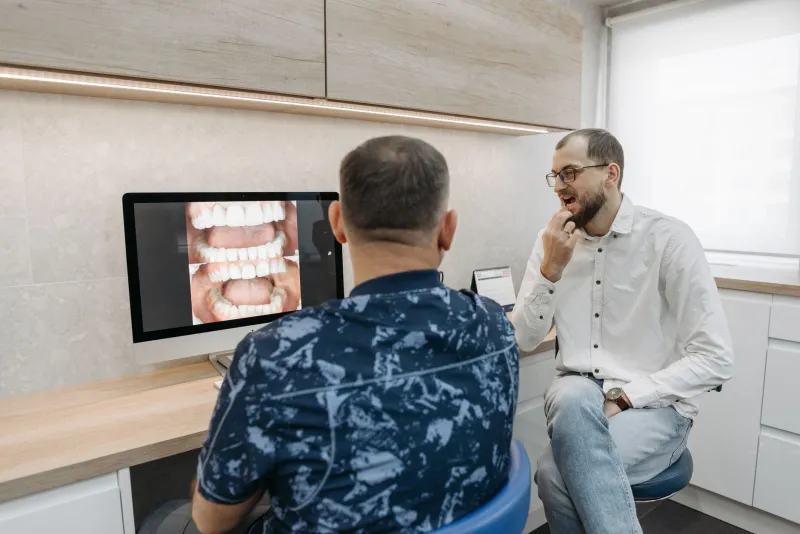
Walk into almost any dental surgery in Queensland and ask the dentist what patients most frequently get wrong about their tap water. You will likely hear a familiar list of concerns — concerns that travel from community Facebook groups into waiting rooms, from podcast episodes into appointment conversations. Some questions are born of genuine curiosity. Others carry the weight of misinformation that has circulated online for years.
To address these directly, we spoke with dental professionals practising across Queensland — from suburban Brisbane to regional centres — and asked them to respond to the questions and claims they encounter most often. What follows is not a sanitised FAQ. It is a frank account of what Queenslanders are actually asking, and what the evidence actually says.
"Surely the dose makes it dangerous — aren't we just drinking low-level poison?"
This is one of the most common reframings dentists encounter, and it sounds logical on the surface. Yes, fluoride at very high concentrations is toxic. So is water, paracetamol, and vitamin A. The relevant question is always whether the dose in question causes harm.
Queensland's water fluoridation operates at a concentration of around 0.6 to 0.9 milligrams per litre — a range set and monitored by Queensland Health. At this level, decades of peer-reviewed research, including large-scale systematic reviews by the National Health and Medical Research Council (NHMRC), have found no credible evidence of harm in the general population.
"Patients sometimes come in with printouts showing fluoride listed as a neurotoxin," one Brisbane-based dentist told us. "What those printouts rarely mention is that the studies cited typically involve exposures ten to twenty times higher than what comes out of a Queensland tap. Context matters enormously."
"I've read it lowers IQ in children. Why would I give that to my kids?"
This claim circulates persistently, and it deserves a careful answer rather than a dismissive one. The studies most often cited in these conversations come from regions in China and other parts of Asia where naturally occurring fluoride levels in groundwater can reach 2 to 10 milligrams per litre — far exceeding what is used in Australian community water fluoridation.
The NHMRC's 2017 public statement on fluoride reviewed the available evidence and concluded that community water fluoridation at Australian concentrations is not associated with adverse effects on cognitive development. A 2022 updated review maintained this position.
"I understand why parents are concerned — they should scrutinise anything that affects their children," said a paediatric dental specialist practising in Southeast Queensland. "But the science distinguishing naturally high fluoride exposure from carefully managed community fluoridation is well-established. These are not the same thing, and treating them as equivalent does families a disservice."
"If fluoride is so good for teeth, why do some kids get those white spots?"
This is a fair and frequently misunderstood point. The white flecks or streaks some people notice on teeth are called dental fluorosis, and they can result from excessive fluoride intake during the years when permanent teeth are forming — typically before the age of eight.
Mild fluorosis is largely cosmetic and does not affect tooth function or health. It most commonly results not from drinking water but from children swallowing toothpaste, which contains fluoride at much higher concentrations than tap water.
"The irony is that parents worried about fluorosis from water are often not watching how much toothpaste their three-year-old is eating," one Gold Coast dentist noted. "A pea-sized amount is the recommendation for a reason. The water at Queensland's regulated levels is simply not the culprit in most cases I see."
The Australian Dental Association advises using a low-fluoride children's toothpaste until age six, and a standard fluoride toothpaste thereafter — guidance that accounts for the total fluoride picture.
"Fluoride is a pharmaceutical — shouldn't we have a choice about taking it?"
The framing of water fluoridation as mass medication without consent is one of the more philosophically charged objections dentists encounter. It raises genuine questions about bodily autonomy, even if the scientific premise is contested.
Public health professionals typically classify fluoridation alongside other water treatment processes — chlorination, pH adjustment — as infrastructure-level interventions designed to bring a natural mineral to a level proven to benefit community health. Fluoride occurs naturally in all water sources; fluoridation simply adjusts that level.
"I respect that some patients feel strongly about this," said a dentist practising in regional Queensland. "What I try to help them understand is that the alternative — doing nothing — also has consequences. In communities without fluoridated water, the data on tooth decay, particularly among children from lower-income families, is stark. The choice not to fluoridate is still a choice, and it carries its own public health costs."
For those who prefer not to drink fluoridated tap water, that remains an individual choice. Bottled water, filters, and alternative sources are available.
"My grandmother had perfect teeth and never drank fluoridated water."
Anecdote is powerful, and dentists hear this one often. Individual variation in dental health is real and influenced by genetics, diet, oral hygiene habits, and access to dental care. Some people are simply more resistant to decay than others.
But public health policy is not designed around the individual — it is designed around populations. When researchers examine large groups over time, the protective effect of community water fluoridation on rates of tooth decay is consistent and well-documented. Queensland's own data, gathered before and after the expansion of fluoridation under the Water Fluoridation Act 2008, reflects this broader pattern.
"I've also had patients whose grandparents lost all their teeth by fifty," one dentist observed. "We don't always know what we're comparing against."
"Natural is always better — why not just let teeth be?"
The appeal to nature is understandable, but dentists are quick to point out that untreated tooth decay is itself entirely natural — and deeply damaging. Cavities cause pain, infection, and in severe cases, hospitalisation. In Queensland, dental conditions remain among the most common reasons children are admitted to hospital under general anaesthetic.
Fluoride, meanwhile, is a naturally occurring mineral found in soil, plants, and water worldwide. Adjusting its concentration in drinking water to a level that supports dental health is an intervention, yes — but so is wearing sunscreen, adding iodine to table salt, or fortifying bread with folate.
"Natural doesn't automatically mean safe, and intervention doesn't automatically mean harmful," said one dentist. "We do our patients a better service when we move past that binary."
The Conversation Continues
Queensland's dental professionals are not dismissive of the questions their patients bring through the door. Scepticism, when it is engaged with honestly and answered with evidence, is a healthy part of how communities make sense of public health policy.
What these dentists share is a consistent observation: the gap between what the peer-reviewed science says about fluoridation at Australian concentrations and what circulates on social media is significant. Closing that gap, one patient conversation at a time, is part of what they do.
For Queenslanders wanting to explore the evidence further, Queensland Health and the NHMRC both publish accessible summaries of the current scientific position on water fluoridation. Your dentist, too, is a reliable starting point — and they have almost certainly heard your question before.