What Your Queensland Dentist Wants You to Ask About Fluoride
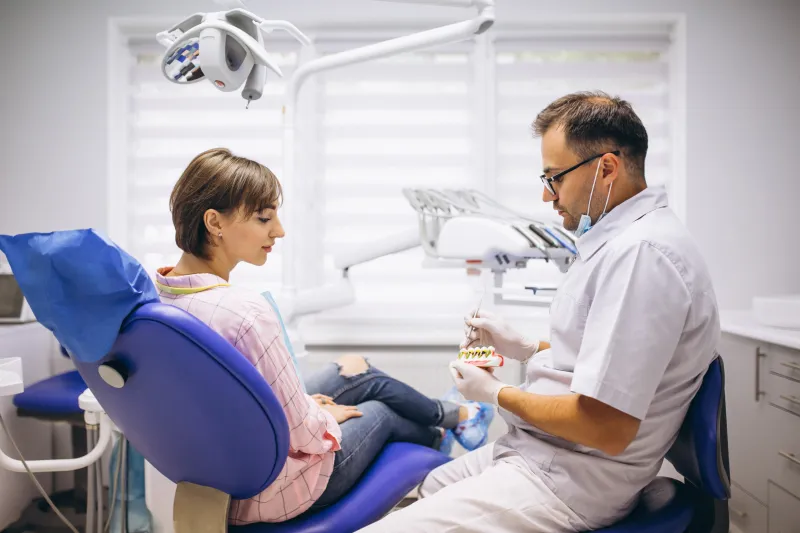
Photo: dentist consulting patient in dental chair Australia, via get.pxhere.com
For many Queenslanders, the dentist's chair is where abstract public health policy becomes deeply personal. A routine check-up can quickly turn into a discussion about drinking water, toothpaste, and the health of a child's developing teeth. Yet according to dental professionals practising across the state, the conversations patients initiate rarely reflect the questions that matter most.
We spoke with general dentists and oral health therapists working in metropolitan Brisbane, regional centres such as Townsville and Rockhampton, and remote communities to understand how they navigate fluoride discussions — and what they genuinely wish their patients would raise.
The Gap Between Public Debate and Clinical Reality
The online discourse around water fluoridation can be loud, polarising, and frequently disconnected from the evidence base that informs clinical practice. Dental professionals say they encounter the consequences of this gap regularly.
"Patients often come in having read something alarming on social media, and the first thing I need to do is separate the science from the noise," says one Brisbane-based general dentist with more than fifteen years of practice experience. "What I rarely get asked is the straightforward question: based on the evidence, is fluoridated water actually good for my teeth? The answer is yes — and I'd love more opportunities to explain why."
The evidence underpinning that answer is substantial. Australia's peak health bodies, including the National Health and Medical Research Council (NHMRC), have consistently concluded that water fluoridated at the recommended level of 0.6 to 1.1 milligrams per litre is both safe and effective in reducing dental decay. Queensland's own water fluoridation program, which expanded significantly following the introduction of the Water Fluoridation Act 2008, is built on this foundation.
Common Misconceptions Practitioners Encounter
Across the interviews we conducted, a handful of misconceptions surfaced repeatedly.
"More fluoride must be better." Some patients, particularly parents keen to protect their children's teeth, assume that supplementing fluoridated tap water with additional fluoride products will yield proportionally better outcomes. Dental professionals are clear that this is not the case. Excessive fluoride intake during the period when teeth are developing can cause dental fluorosis — a cosmetic condition that results in white spots or, in more pronounced cases, surface irregularities on tooth enamel. "The message I try to give is that fluoride works best within the right range," explains an oral health therapist based in Cairns. "It's not a case of more being better. The public water supply is calibrated to sit in the effective and safe zone."
"Fluoride is a chemical added to water — therefore it's artificial and dangerous." This framing troubles many practitioners because it conflates the word "chemical" with harm. Fluoride is a naturally occurring mineral found in varying concentrations in groundwater across Queensland. Water fluoridation adjusts those concentrations to an optimal level — a process not fundamentally different from adding iodine to salt or vitamin D to milk. "When patients put it to me that way, I ask them whether they consider iodised salt to be dangerous," says a dentist practising in Toowoomba. "It usually prompts a useful conversation."
"We live in a fluoridated area, so I don't need to worry about my child's teeth." Fluoridated water is one component of a broader oral health strategy, not a substitute for brushing, diet management, and regular dental visits. Practitioners in Brisbane's outer suburbs note that this misconception can lead to delayed presentations with entirely preventable decay.
Advice Differs Across Fluoridated and Non-Fluoridated Regions
Queensland's fluoridation coverage is not uniform. While the majority of Queenslanders connected to reticulated water supplies now receive fluoridated water, a significant number of residents — particularly those in smaller regional communities, rural areas, and properties relying on tank or bore water — do not.
This geographic variation changes the clinical conversation considerably. In non-fluoridated areas, dental professionals are more likely to recommend fluoride varnish applications during check-ups, discuss the appropriate use of fluoride supplements for children, and encourage families to use fluoride toothpaste diligently. "My clinical recommendations shift depending on where a patient lives and what they're drinking at home," notes a dentist serving communities in the Darling Downs region. "That's why it's so important for patients to tell me about their water source. It directly affects the advice I give."
Patients in these areas are also encouraged to consider the broader context of their oral health environment — including diet, access to dental services, and socioeconomic factors that research consistently links to higher decay rates in regional and remote Queensland.
The Questions Practitioners Most Want to Hear
When we asked dental professionals directly what they wished patients would ask, their responses were telling.
- "Is my child getting the right amount of fluoride for where we live?" This question opens a productive conversation about local water quality, appropriate toothpaste use for different age groups, and whether clinical fluoride applications are warranted.
- "I've read concerns about fluoride online — can you help me understand the evidence?" Practitioners welcome this because it signals a willingness to engage with the science rather than accept or dismiss claims uncritically.
- "How does fluoride actually protect teeth?" Understanding the mechanism — fluoride's role in remineralising enamel and inhibiting bacteria that produce decay-causing acids — helps patients appreciate why it remains a cornerstone of preventive dentistry.
"Informed patients make better health decisions," says a senior dentist at a public dental clinic in Ipswich. "I'd rather spend five minutes answering genuine questions than have someone leave with misconceptions they found on the internet."
Working With Your Dentist as a Partner
The broader message from Queensland's dental community is one of partnership. Fluoride, whether delivered through the water supply, toothpaste, or professional treatments, is most effective when it sits within a personalised oral health plan developed in consultation with a qualified practitioner.
If you have concerns about fluoride — whether related to your own health, your children's teeth, or the quality of your local water supply — your dentist is the most appropriate first point of contact. They can review your specific circumstances, clarify what the evidence actually shows, and tailor their recommendations accordingly.
Queensland Health also maintains current information about the state's water fluoridation program, including which communities receive fluoridated water and at what concentrations. Accessing this information before your next appointment means you can arrive with better questions — and leave with more useful answers.
The fluoride conversation doesn't have to be adversarial or anxiety-inducing. In the right setting, with the right professional, it can be one of the most practically useful discussions you have about your family's long-term health.