Espresso, Ethics, and the Tap: How Queensland's Specialty Coffee Scene Is Wrestling With Fluoridated Water
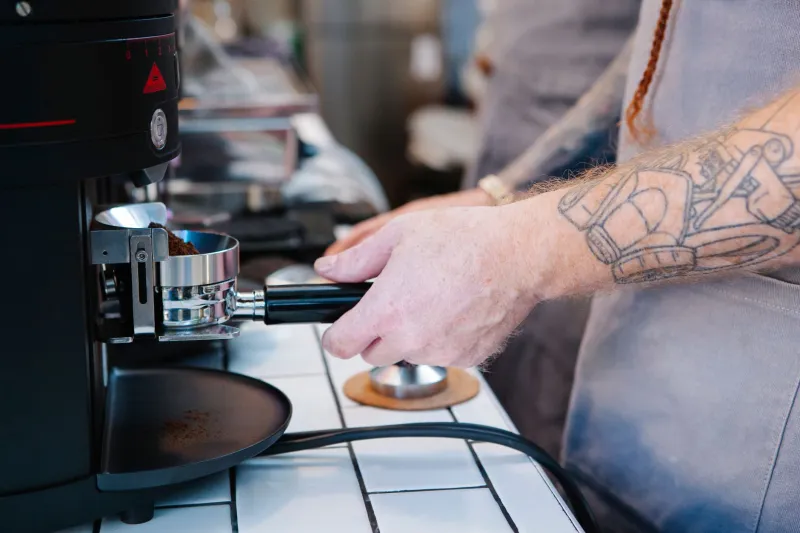
A New Question Across the Counter
Queensland's cafe scene has undergone a quiet revolution over the past decade. From inner-Brisbane's laneway espresso bars to specialty roasters operating out of converted Cairns warehouses, the state's coffee culture has grown increasingly sophisticated. With that sophistication has come a sharper focus on every variable in the cup — including, more recently, the water used to brew it.
For many baristas, water quality has long been a professional preoccupation. Mineral content, pH levels, total dissolved solids — these are the kinds of conversations that play out at industry events and in the back rooms of serious cafes. But a newer line of inquiry has entered the mix: what role does fluoridation play, and should cafe owners be concerned?
The answer, according to both food scientists and public health authorities, is rather less dramatic than some online discussions suggest.
What Fluoridation Actually Adds to the Water
To understand the debate, it helps to start with the basics. Queensland's water fluoridation program, governed under the Fluoridation of Water Supplies Act 2008, adjusts fluoride concentrations to approximately 0.7 milligrams per litre — a level consistent with World Health Organization recommendations and the Australian Drinking Water Guidelines.
At that concentration, fluoride is present in quantities that are vanishingly small relative to the other dissolved minerals that actually influence espresso extraction. Calcium and magnesium hardness, bicarbonate alkalinity, and sodium levels all exert a far more meaningful influence on how water interacts with coffee grounds during brewing.
The Specialty Coffee Association's water quality standards, which many serious Australian cafes reference, make no specific mention of fluoride as a variable of concern. The parameters they prioritise — total dissolved solids in the range of 75 to 250 mg/L, a target calcium hardness of around 50 to 175 mg/L, and near-neutral pH — are the ones that genuinely shape extraction chemistry and flavour development.
"Water is the most underappreciated ingredient in coffee," says one Brisbane-based head barista who competes at national level. "But when I'm thinking about what's in my water, I'm focused on hardness and alkalinity. The fluoride level at 0.7 milligrams per litre is simply not something that registers in the cup."
The Customer Conversation
That scientific perspective, however, does not always translate to the customer experience. As health-conscious Queenslanders have become more engaged with questions about fluoride — partly driven by social media content that ranges from the well-intentioned to the deeply misleading — some cafe owners report fielding questions about their water sources with greater frequency.
In regional Queensland, where a patchwork of fluoridated and unfluoridated supplies exists depending on local infrastructure, the conversation takes on additional texture. Cafe owners in towns served by unfluoridated water sometimes encounter customers who actively prefer it for that reason — not because of any demonstrable effect on flavour, but because of broader anxieties about fluoride that circulate online.
Conversely, some customers in fluoridated areas have begun asking whether cafes use filtered water, and if so, whether that filtration removes fluoride. The answer varies widely. Many cafes use under-bench filtration systems primarily designed to reduce chlorine and sediment, which typically do not remove fluoride to any significant degree. Reverse osmosis systems, which do remove fluoride, are used by a smaller subset of specialty operators — though these are generally installed to achieve precise mineral profiles for brewing, rather than out of concern about fluoridation.
The Filtration Question
For cafes that do use reverse osmosis or other comprehensive filtration, a separate public health consideration comes into play. Water stripped of most dissolved minerals — including fluoride — often needs to be remineralised before it is suitable for espresso. Without adequate mineral content, the water becomes what industry professionals call "aggressive," leading to over-extraction and flat flavour profiles.
Some high-end cafes use remineralisation cartridges or add specific mineral compounds to achieve a target water profile. In doing so, they are essentially constructing their own water chemistry from scratch — a process that has nothing to do with fluoridation policy and everything to do with brewing precision.
Public health authorities have noted that while such filtration choices are entirely legal and legitimate for commercial purposes, they do mean that beverages made with comprehensively filtered and remineralised water no longer carry the trace fluoride benefit associated with tap water consumption. For adults who consume multiple cups of cafe coffee daily, this is unlikely to represent a meaningful public health concern. For children or individuals with limited access to other fluoride sources, the contribution of fluoridated tap water — whether drunk directly or used in beverages — is worth keeping in mind.
Milk, Steam, and the Bigger Picture
Beyond espresso extraction, some Queensland cafe owners have raised questions about whether fluoridated water affects the quality of steamed milk — a central component of the flat whites, lattes, and cappuccinos that dominate Australian cafe menus.
Here again, the evidence does not support any meaningful effect at the concentrations present in Queensland's treated water supply. Milk texture and microfoam quality are determined primarily by milk fat content, protein structure, steaming technique, and temperature — not by the mineral composition of the small quantity of water that might incidentally contact the steam wand.
A Measured Perspective for Cafe Owners
For Queensland cafe owners navigating customer questions about fluoridated water, a few principles are worth keeping in mind.
First, the science is clear that fluoride at 0.7 mg/L does not materially affect espresso extraction quality, milk-based drink texture, or flavour profile. Any barista or commentator claiming otherwise is not working from an evidence base.
Second, water filtration decisions made for brewing quality reasons are entirely appropriate — but should be communicated to customers accurately, without implying that fluoridated tap water is unsafe or inferior.
Third, customers who raise concerns about fluoride deserve a respectful, factual response. Pointing them toward reliable sources — such as Queensland Health or the National Health and Medical Research Council — is both responsible and professionally appropriate.
The conversation happening across Queensland's cafe counters is, in many ways, a microcosm of a broader public health communication challenge. The specialty coffee community has an opportunity to model what evidence-informed engagement with health questions looks like — one cup at a time.